




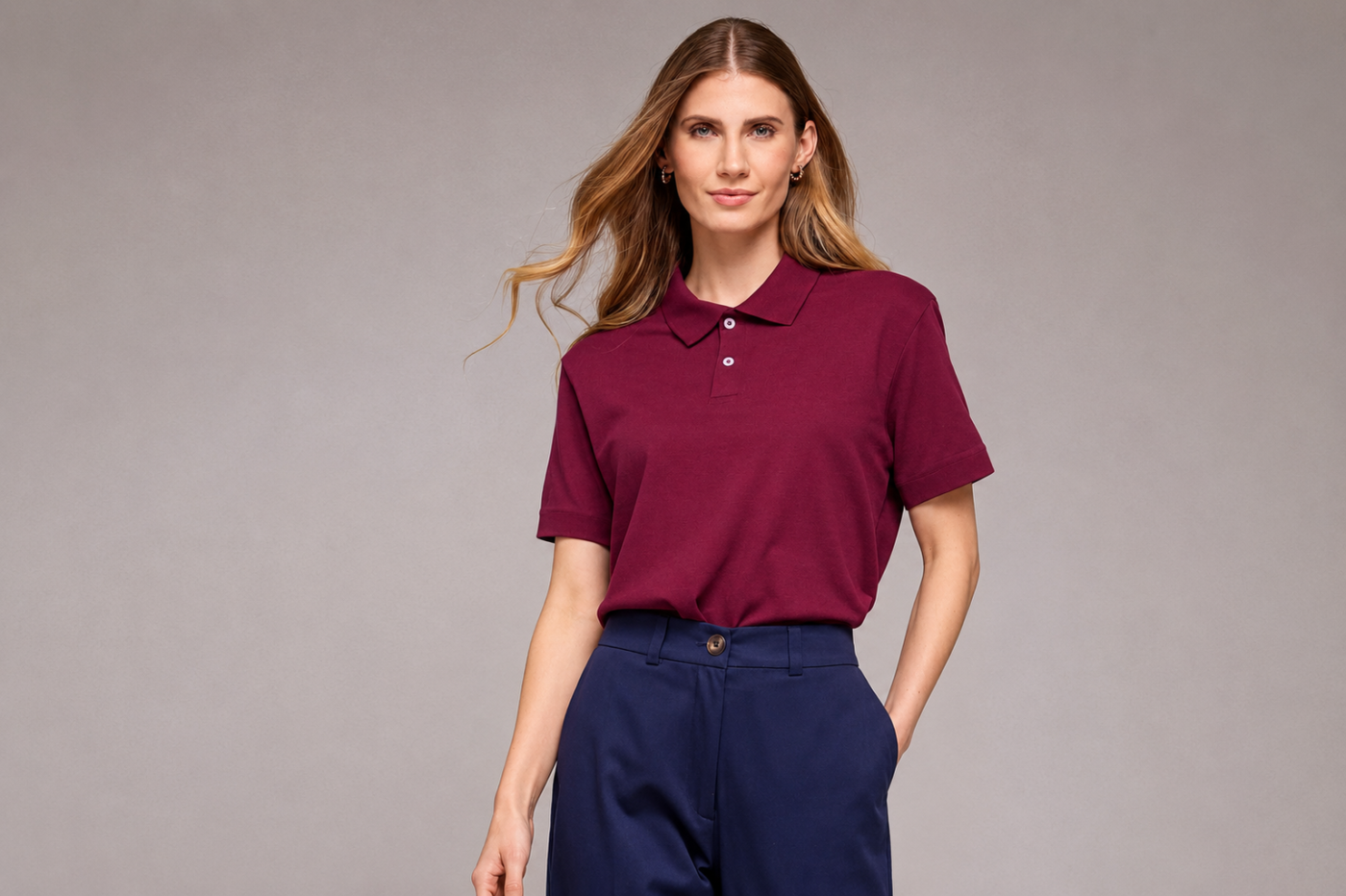
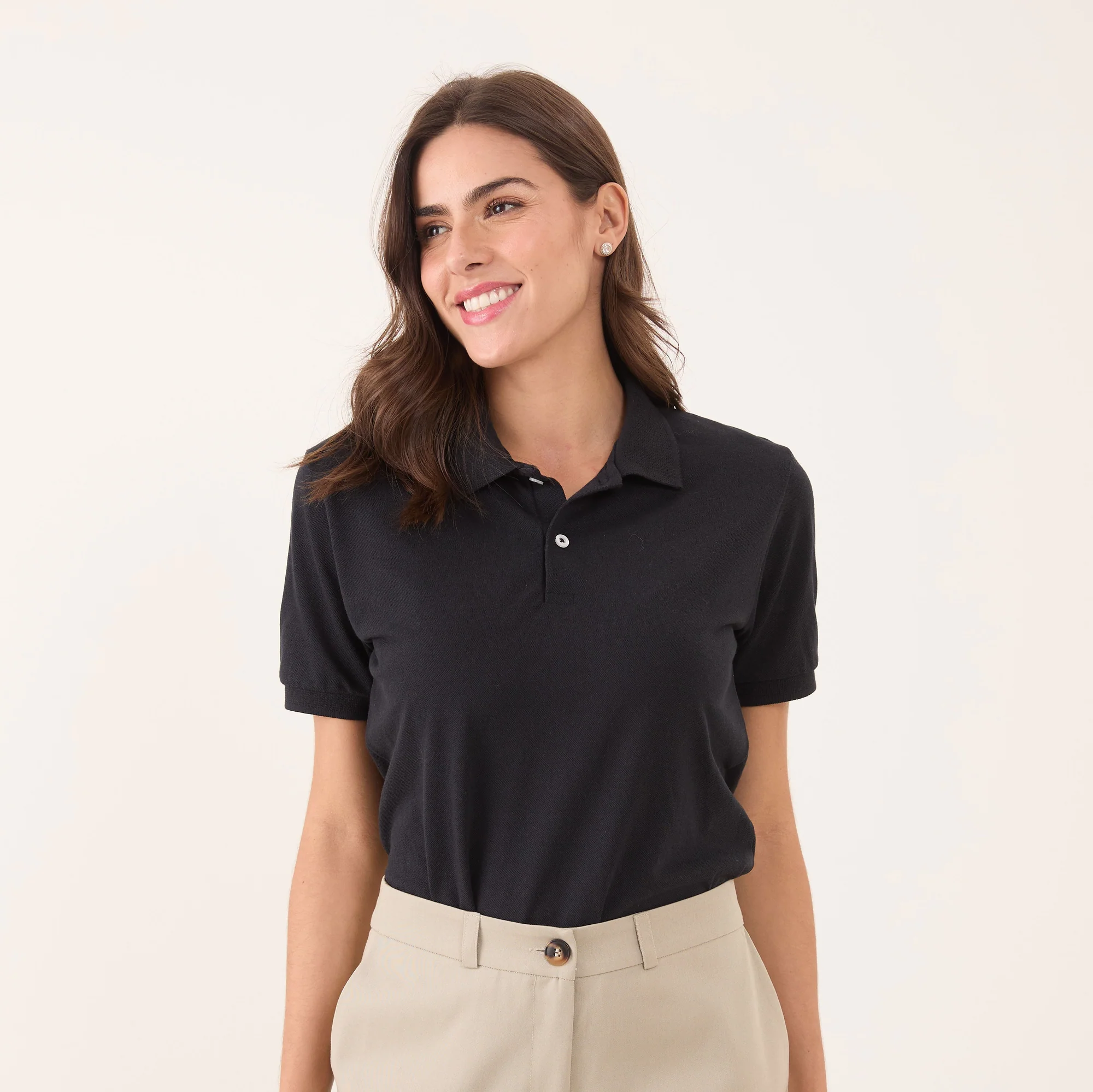
The polo shirt is among the most chosen pieces by companies to uniform their teams.
It works as a middle ground between the formality of the dress shirt and the informality of the t-shirt, combining a professional look with comfort and mobility.
Therefore, it moves well between formal, informal, and operational environments. But is it always the best choice?
In this article, we show some contexts in which polo really works well and others in which it may be worth considering other alternatives.
When is the polo shirt a good choice?
The answer depends on the context of use. To better understand, it is worth starting with the scenarios in which the polo really stands out and showing why it is usually the right choice in these situations.
1. For customer service teams
For those who work in contact with the public, in environments that do not require so much formality, the polo shirt offers a professional appearance in the right measure.
The collar and buttons make the look more structured and convey more confidence and organization during the service.
At the same time, the piece is light and comfortable for the routine, which makes it a good choice for functions such as store attendants, waiters, doormen and drivers.
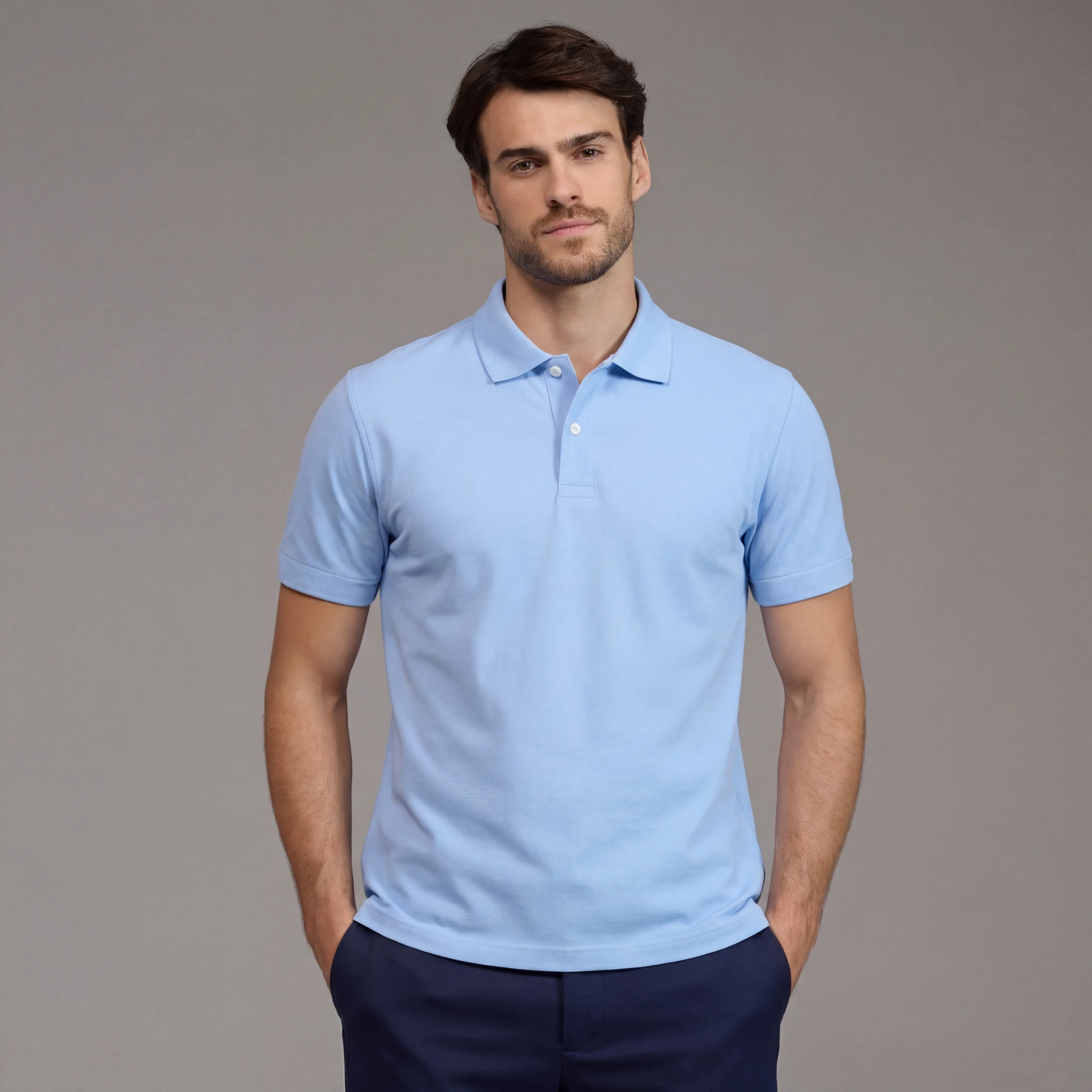
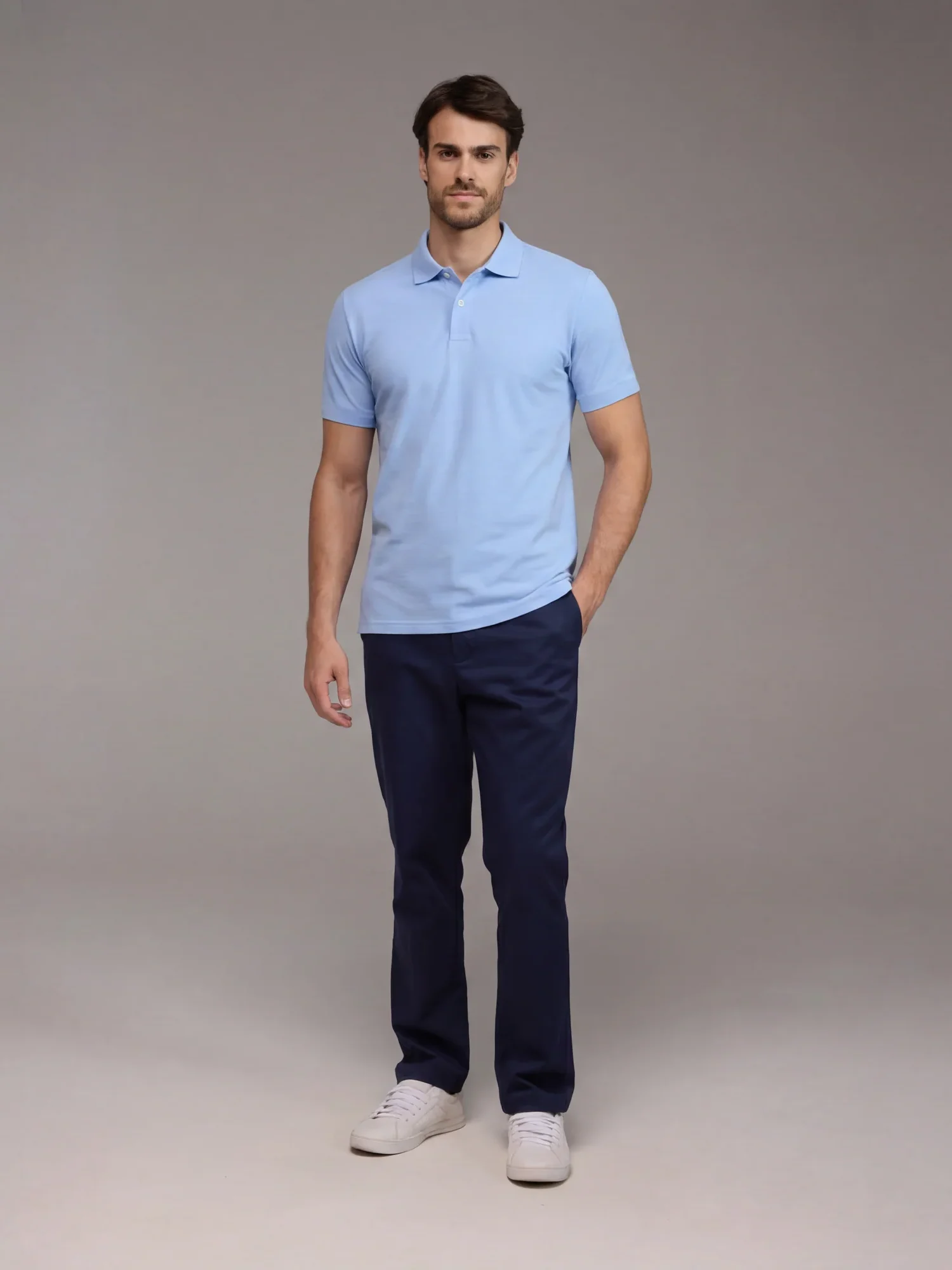
2. For events and trade shows
Fairs, events, and promotional actions require the team to spend a good part of their time standing, interacting with different people, and moving around the space.
The polo works well in these cases because it offers more comfort and freedom of movement while maintaining a professional presentation in front of customers and partners.
It is a good option for promoters, salespeople, and support teams, who need to be easily identified and represent the company during these occasions.
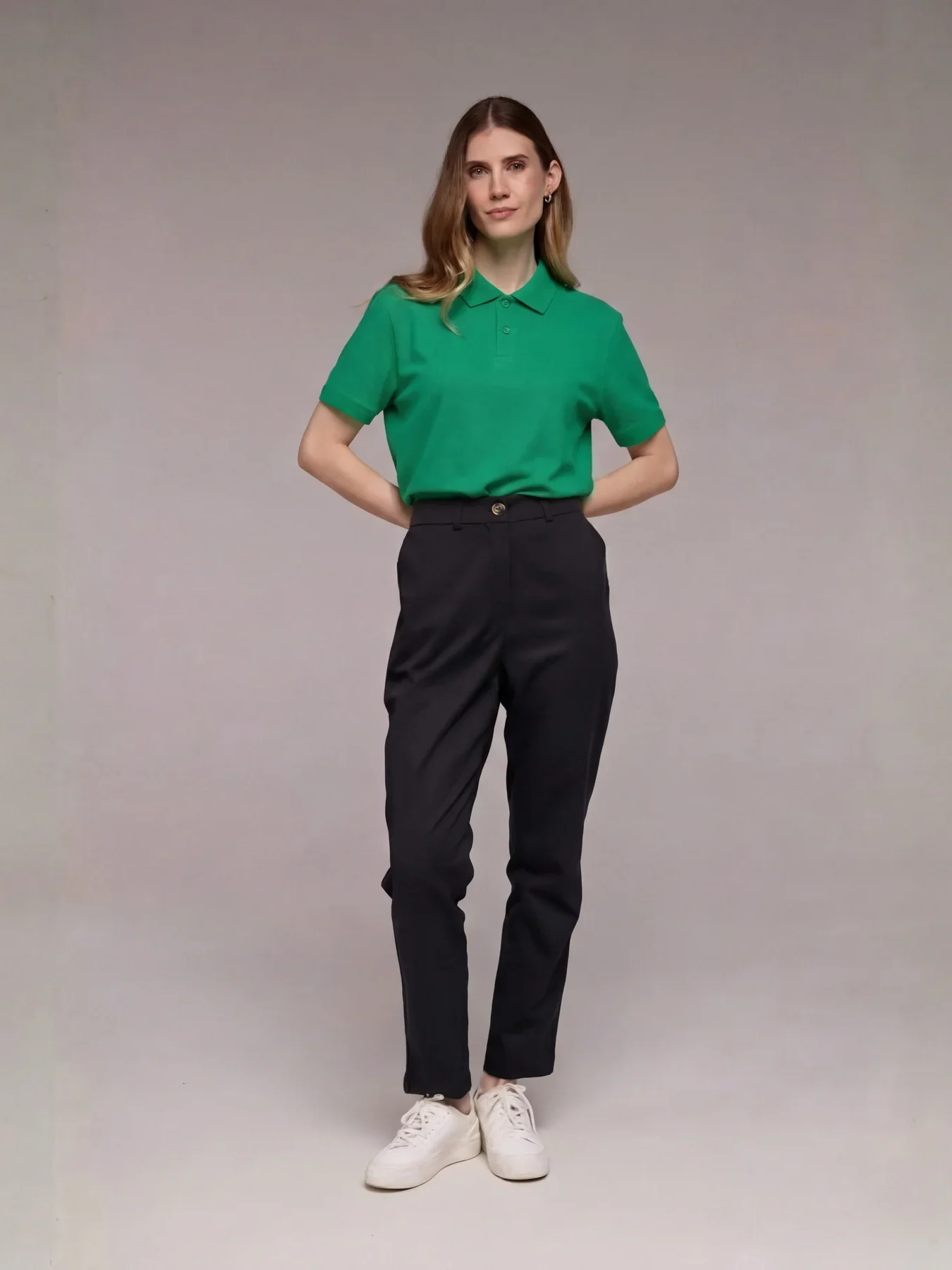
3. Companies with a semi-formal style
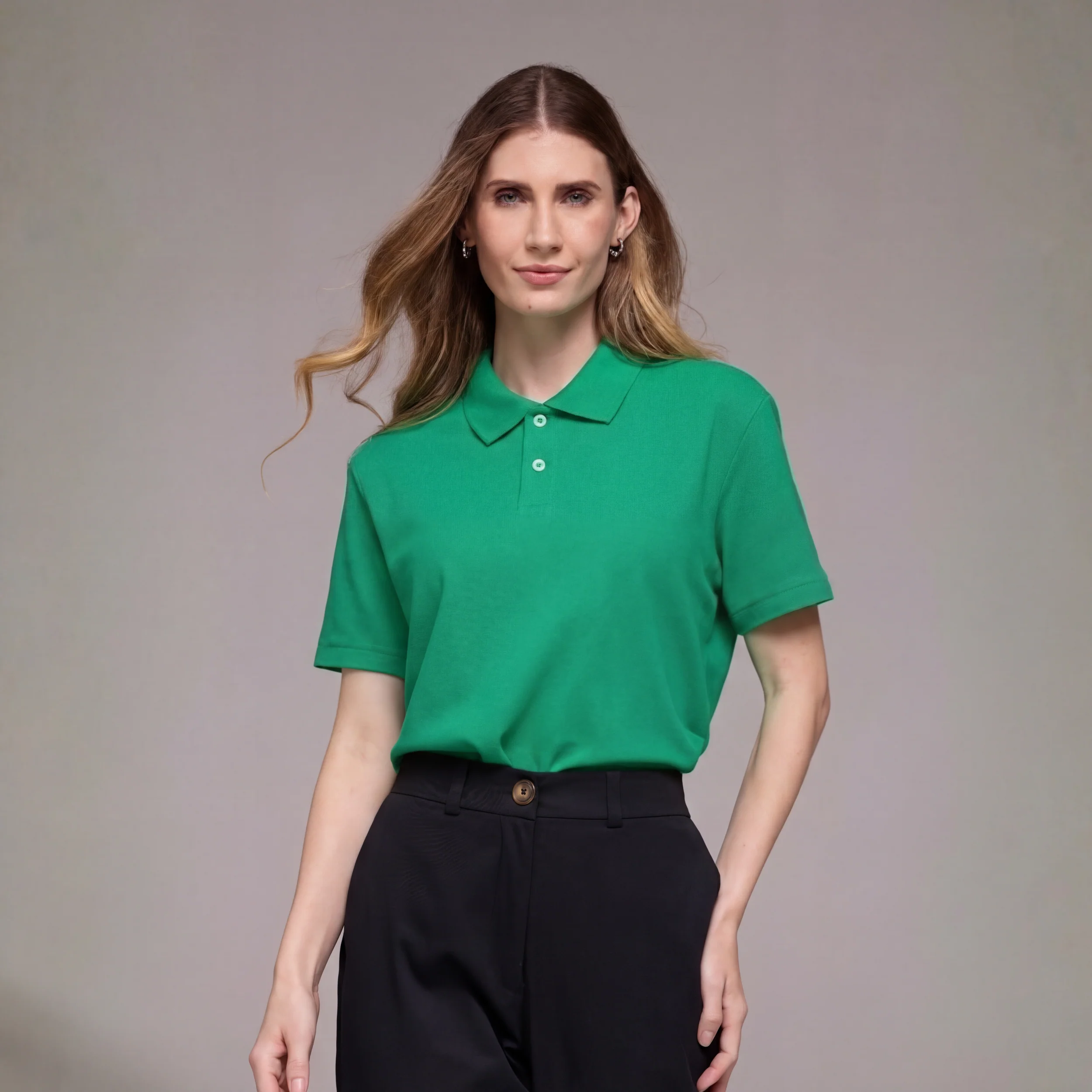
Some companies do not have such a formal profile as to wear a dress shirt, but they also do not adopt a very casual dress code.
In these cases, the polo shirt can occupy this intermediate space and help establish a standard of presentation without leaving the look rigid.
It can work especially well in offices, real estate, and technology companies with a casual or business casual culture, where comfort is part of the routine, but there is still a concern about the team’s image.
4. For those who travel and visit customers
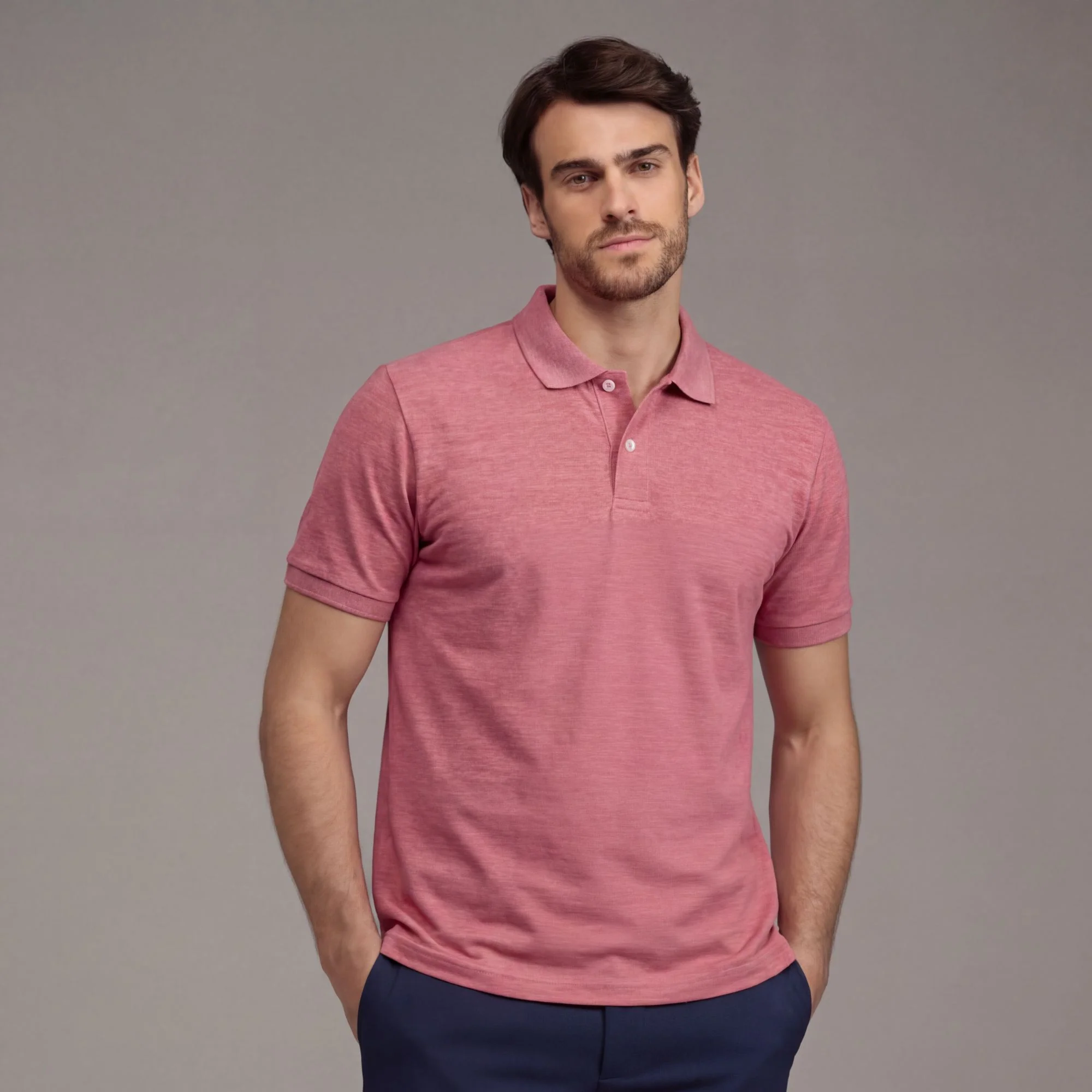
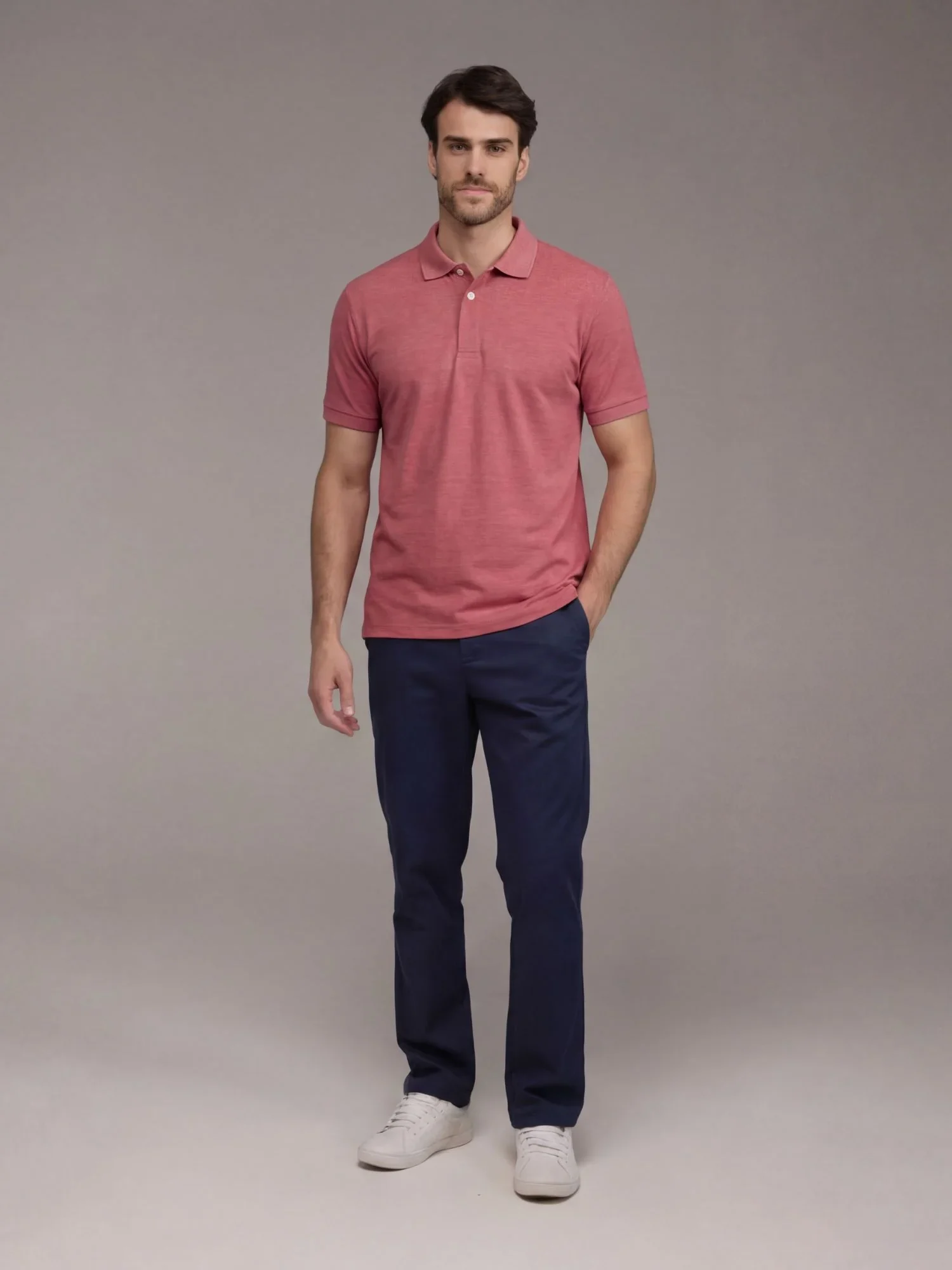
For professionals who spend a good part of the day away from the company, visiting customers or circulating in different places, the polo shirt combines practicality and comfort to accompany these displacements.
The piece adapts to a dynamic routine and ensures a more aligned appearance for the moments of service.
It is a good option for commercial representatives, brokers, consultants and technical assistance professionals who carry out visits in more informal contexts.
When might polo not be the best choice?
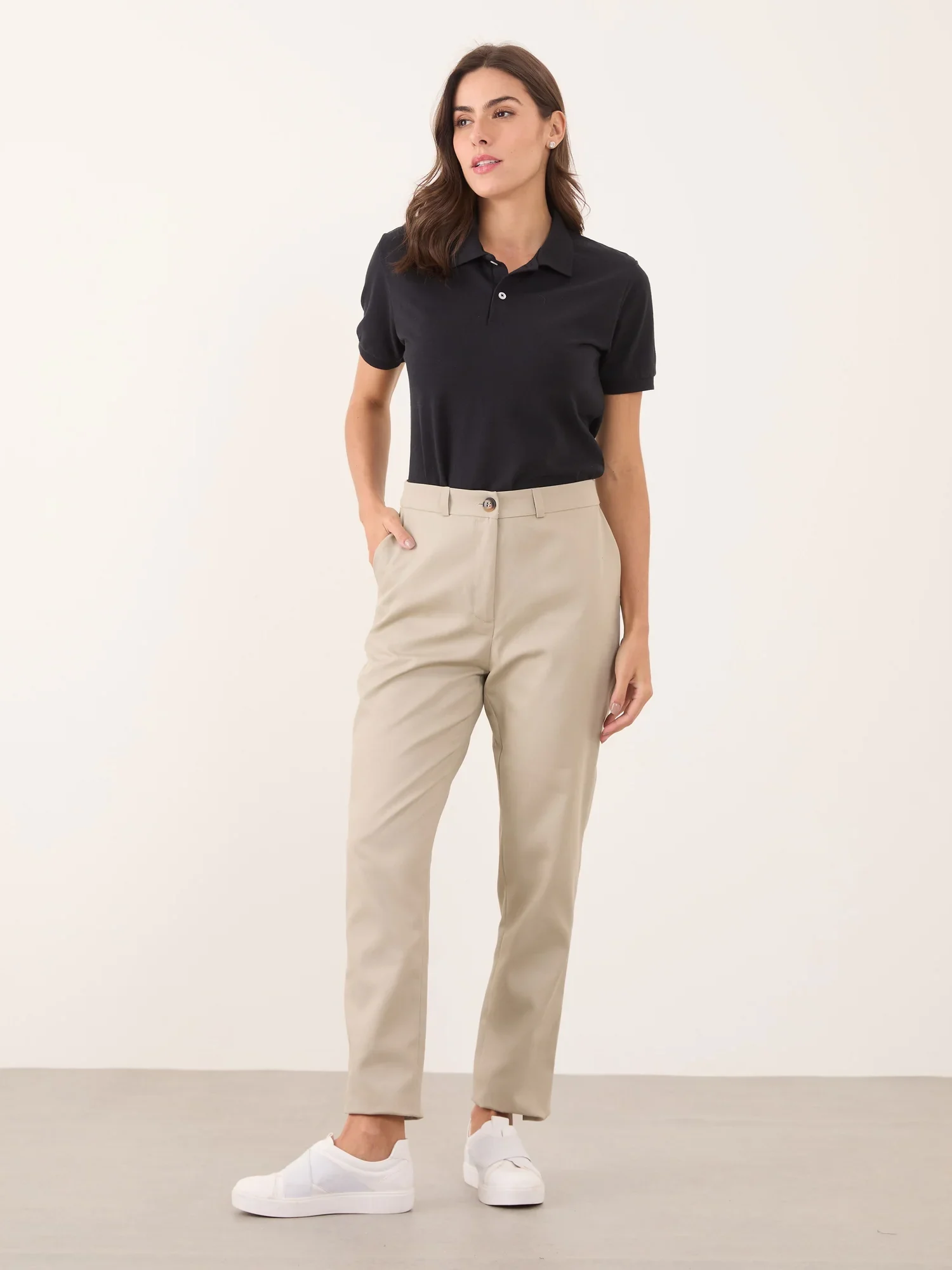
The polo is versatile, democratic and has great cost-benefit, so it has become a kind of wild card when it comes to standardizing teams, a safe choice for those who want to avoid mistakes.
But being a safe option is not the same as being the ideal option. Sometimes, what your team needs is not a universal piece, but something designed for the particularities of their routine.
Here are some scenarios where it’s worth considering other options.
1. High formality environments
Luxury hotels, haute cuisine restaurants, traditional offices ask for a more elegant and refined image, which can be better built with dress shirts, blazers and other tailored pieces.
Trying to make the polo more formal, closing all the buttons, does not change the proposal of the piece.
The knitted collar and the construction of the shirt itself maintain a more casual and sporty aesthetic, which can end up giving an improvised image in environments that require more sophistication.


2. Work with intense physical effort
In activities that require intense physical effort, wide movements and a fast pace of work, polo may no longer be the most comfortable option.
The fuller fabric and more fitted fit may not be flexible enough, while the collar can generate friction and accumulate sweat throughout the day.
In addition, frequent contact with dirt and rough surfaces also requires more wear-resistant parts.
For gardeners, loading and unloading, maintenance and heavy cleaning professionals, jeans or twill pants and functional lab coats can offer more durability and practicality.
3. Companies with a creative essence
In art galleries, design studios, creative agencies and fashion companies, polo can convey just the opposite of the image that the brand wants to build.
As it is a piece closely associated with standardization and the corporate environment, it can make the team’s look too generic for companies that want to convey creativity, innovation, and originality.
In these cases, it is worth thinking about pieces that have more personality and better express the brand’s universe.


4. For hazardous activities
In some activities, the uniform needs to go beyond the identification of the team and also offer protection for those who are working.
In construction, metallurgy, chemical laboratories and professional kitchens, for example, exposure to heat, sparks, chemicals and other agents requires specific parts.
In these situations, a conventional polo shirt may not offer the necessary protection. Depending on the risks of the activity, the uniform may require FR fabrics, more resistant materials or protection against certain fluids.
Polo shirt: is it the right choice for your team?
The polo shirt works great for different companies, but it is not always the best choice for all routines.
The perfect uniform for your business needs to consider the needs of each function, the work environment, and the image that the brand wants to convey.
At Dash, you will find different polo shirts and uniform models to choose the one that best meets the reality of your team.
If you need help defining the best option, our consultants are available via WhatsApp to guide you.